Murder-mystery logic puzzles explained: Murdle, Murdoku and placement puzzles
Updated 30 October 2026
By the Heistgrid team, a small puzzle studio · How we check every case
Murdle is a deduction-grid series by G. T. Karber where you match suspects to places, weapons and motives, while Murdoku is a sudoku-style series by Manuel Garand where you place suspects on an illustrated crime scene and the killer is whoever ends up alone with the victim. If either of those sounds like your kind of evening, a placement puzzle such as Heistgrid is one you can play free in your browser.
What is Murdle?
Murdle is a series of puzzle books by G. T. Karber. Each case gives you a set of suspects and a list of things to work out about them: where they were, what they used and why they did it.
You solve it on a deduction grid. The rows are the suspects; the columns are the places, the weapons and the motives. The clues let you tick a square when you know something is true and cross out the ones you've ruled out. When every suspect has one place, one weapon and one motive, the person holding the deadly combination is your culprit.
It sits closer to a classic logic-grid puzzle than to a crossword. You never guess, you eliminate, and the books come in tiers, so the first ones are gentle and the later ones want a pencil and a quiet afternoon.
What is Murdoku?
Murdoku is a series by Manuel Garand. Here the board is a picture: an illustrated crime scene drawn as a grid of squares, with the victim lying in one of them.
You place the suspects on that scene using sudoku-style rules. Some squares are blocked by furniture or walls, and the clues tell you who could stand where. The rule that gives the series its name is the simple one: no two suspects in the same row or column.
Once everyone is placed, the story tells itself. The killer is whoever ends up alone with the victim. You don't need to know anything about crime to play it; you need to know how to rule out squares.
What's the difference between Murdle and Murdoku?
Both ask you to deduce who did it, and both are pure logic with no guessing. The difference is what you're filling in.
Murdle is a matching puzzle. You're connecting people to attributes: place, weapon, motive. The board is a table, and the answer is a set of facts about each suspect.
Murdoku is a placement puzzle. You're putting people on a map, and the answer is a position for each suspect. Space does the reasoning: blocked squares, rows and columns.
So if you like ticking boxes in a table, Murdle is the one. If you like looking at a picture and working out where someone could possibly have stood, Murdoku is the one.
What is a placement puzzle?
A placement puzzle is any puzzle where the answer is a set of positions. You get a small board, a handful of pieces (for us, suspects) and a set of clues, and you work out where each piece goes.
Two things usually make these puzzles work:
- A rule about the board itself. In sudoku and in Murdoku, no two pieces share a row or a column. That one rule does most of the reasoning for you.
- A rule about what's already there. A square holding a bookcase, a cart or a body can't hold a person, so it's crossed out before you start.
Placement puzzles are satisfying because every step is provable. You never wonder whether you were clever enough; you only wonder whether you spotted the clue.
Where does Heistgrid fit?
Heistgrid is a placement puzzle too. Our cases are grids of a scene in Pelican Bay, and you place the suspects from the clues, one per row and column, with grey squares held by objects.
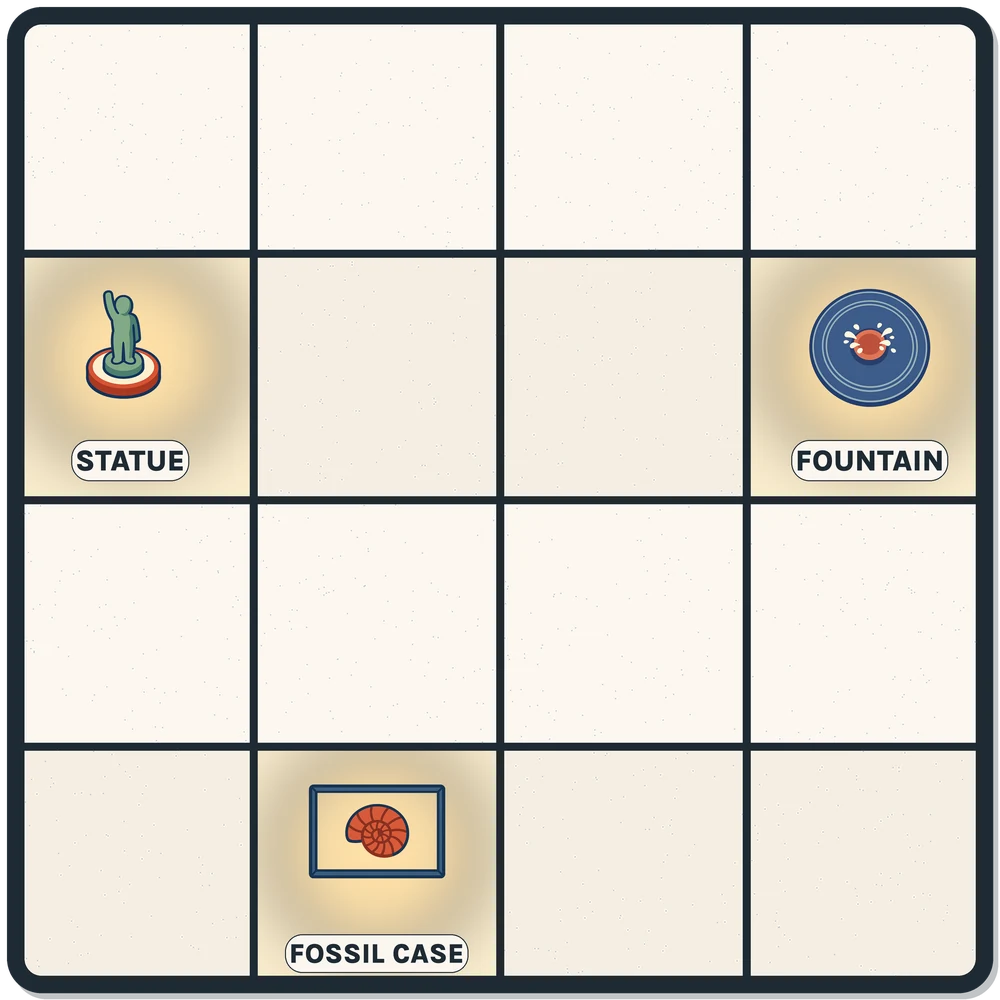
The difference is the last step. In Murdoku, the placement itself names the killer: whoever is alone with the victim. In Heistgrid, placing everyone is only the first half. Once the board is full, a separate final clue tells you who did it — "the culprit was standing right next to the returns cart", for example. Two steps instead of one.
We made that choice for the tone. Nobody gets hurt in Pelican Bay; somebody has taken a pie or swapped a library sign. The final clue turns a tidy grid into a small story, and it gives us one more clue to make a case tricky without making it grim.
If you want to see the shape of it, our demo case "The Quiet Please Sign" is a 3×3 with three suspects, one grey square and the same two-step shape.
Which one should I try first?
It depends on what you want from an evening.
- If you want the full deduction-grid experience, with attributes to match and a proper notebook, start with Murdle.
- If you like a picture in front of you and the satisfaction of filling a board, start with Murdoku.
- If you want something gentle to do with a pencil, where the crime is small and the answer is always provable, try a Heistgrid case. A Junior Sleuth case takes a few minutes; a Master Detective case takes an hour with pencil marks.
Heistgrid isn't affiliated with Murdle or Murdoku. We're a small puzzle studio writing our own cases, and we mention them here because people search for them and the genres really are related.
Ready to place some suspects? See how to play, browse all the cases, or read about the book if you want 50 of these on paper.
Try it yourself




Want 50 of these on paper?
Our book has 50 cases, from gentle to tricky, with step-by-step solutions at the back. About the book
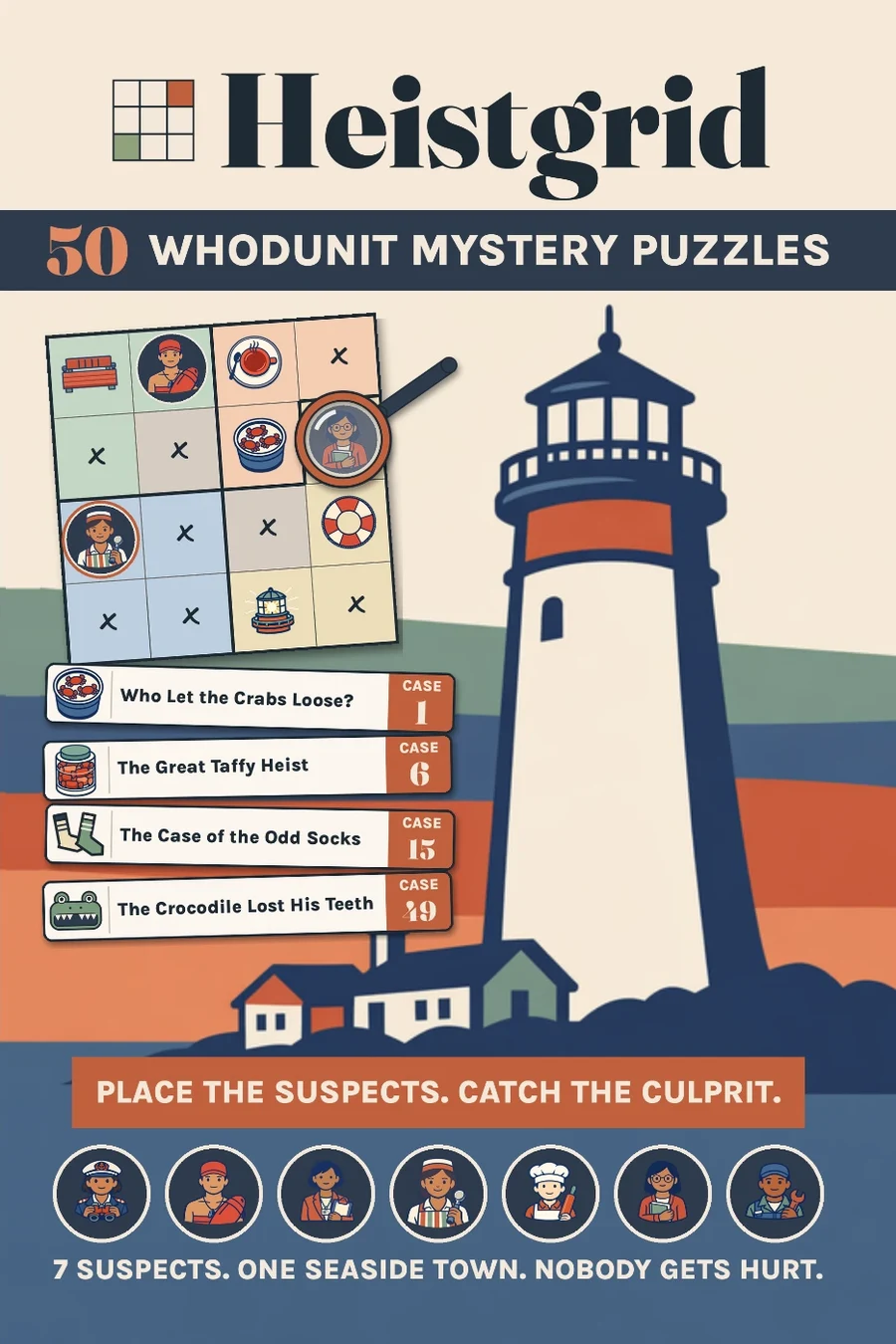
The book: 50 cases, from Junior Sleuth to Master Detective.
Buy the bookMore guides
- How to solve a whodunit logic grid puzzle, step by step
- How to solve a logic puzzle where one witness is lying
- Cozy mystery puzzles where nobody gets hurt
- How a whodunit logic puzzle is made (and checked)
- Knights and knaves puzzles explained (and how liar whodunits differ)
- What is the Einstein (zebra) puzzle? Logic grids vs placement puzzles
- Like sudoku? Try a whodunit puzzle