Are murder mystery puzzle books OK for kids?
Updated 7 November 2026
By the Heistgrid team, a small puzzle studio · How we check every case
It depends on the book, not the genre: 'murder mystery' on a puzzle-book cover can mean a grim crime scene or a missing pie, so a parent should check the violence, the themes, the reading level and the rules before buying. Gentler books keep the same clue-and-suspect deduction with much smaller stakes — in our cases nobody gets hurt, and Junior Sleuth cases suit children of about eight and up with an adult leading.
Are murder mystery puzzle books OK for kids?
It depends on the book, not the genre. "Murder mystery" on a puzzle-book cover can mean a grim crime scene with a body, or it can mean a missing pie and seven suspects who are all fine by the last page. The word tells you the shape of the puzzle — clues, suspects, one answer — not the tone.
Series like Murdle and Murdoku are built around murder cases and are written for adults, so flip through a sample page before giving one to a child. Our own cases involve no violence at all.
So the honest answer is: check the book, then decide. A few minutes with the first case tells you more than the title does.
What should a parent check before buying?
Four things, in order of importance:
Violence, and how it's shown. Does a character die, and does the puzzle linger on it? Some books keep the crime offstage — a body is found, full stop. Others describe it. For younger readers, look for books where the stakes are smaller: theft, sabotage, a prank gone wrong.
Themes. Who are the suspects, and why are they suspected? Jealousy and greed are standard fare; some books add affairs, blackmail or worse. Flip through two or three cases and you'll know.
Reading level. The clues are the whole game. If the sentences are long or the vocabulary is adult, a child can't play — they can only watch you play.
Rule complexity. A 3×3 grid with direct clues is a different proposition from a 5×5 grid with rooms, zones and a witness who lies. Start small.
What about the well-known ones?
Murdle is the book that made the genre famous, and Murdoku is its grid-based cousin. Both are written for adults: the crime is murder, the humour is dry, and the later puzzles are genuinely hard. Plenty of teenagers love them. Whether they suit a younger child is a judgement call for the parent who knows that child — the checks above apply to them exactly as they apply to any other book.
Is there a gentler kind of mystery puzzle?
Yes. Some puzzle books — ours among them — keep the deduction and drop the body. In a Pelican Bay case, an apple pie vanishes from the bakery, a starfish turns up in the wrong tank or the library's date stamp goes missing. Nobody gets hurt. The crime is petty theft and small heists, and the fun is entirely in working out who did it.
That matters more than it sounds. A child who can follow the clues can play the whole game, including the ending: pointing at the culprit and being right. There's no content to skip and nothing to explain away.
At what age can a child start?
With an adult leading, about eight years old is a good starting point for our Junior Sleuth cases — the smallest board, three suspects, direct clues. The adult reads the clues aloud, the child places the suspects, and you swap jobs on the next case.
Teenagers can go straight to the Inspector cases and work up from there. The rank system is a ladder, not a test: you move up when the current rank stops being interesting.
How do you solve one together?
The same way you solve one alone, just out loud. Read a clue, agree on what it pins down, place a suspect, repeat. When the table disagrees, go back to the clue — every case has exactly one answer, so the clue settles it.
If you want the full walkthrough first, our how to play page shows a worked example on a small board, and the Junior Sleuth cases are free to try in the browser before you commit to anything.
So, is a mystery puzzle book a good gift for a kid?
A gentle one, yes — especially for a child who likes riddles, spotting lies and being right. Pick the book where the worst thing that happens is a stolen pie, start on the smallest board, and let the youngest read the final clue. That's the moment they'll remember.
Try it yourself



Want 50 of these on paper?
Our book has 50 cases, from gentle to tricky, with step-by-step solutions at the back. About the book
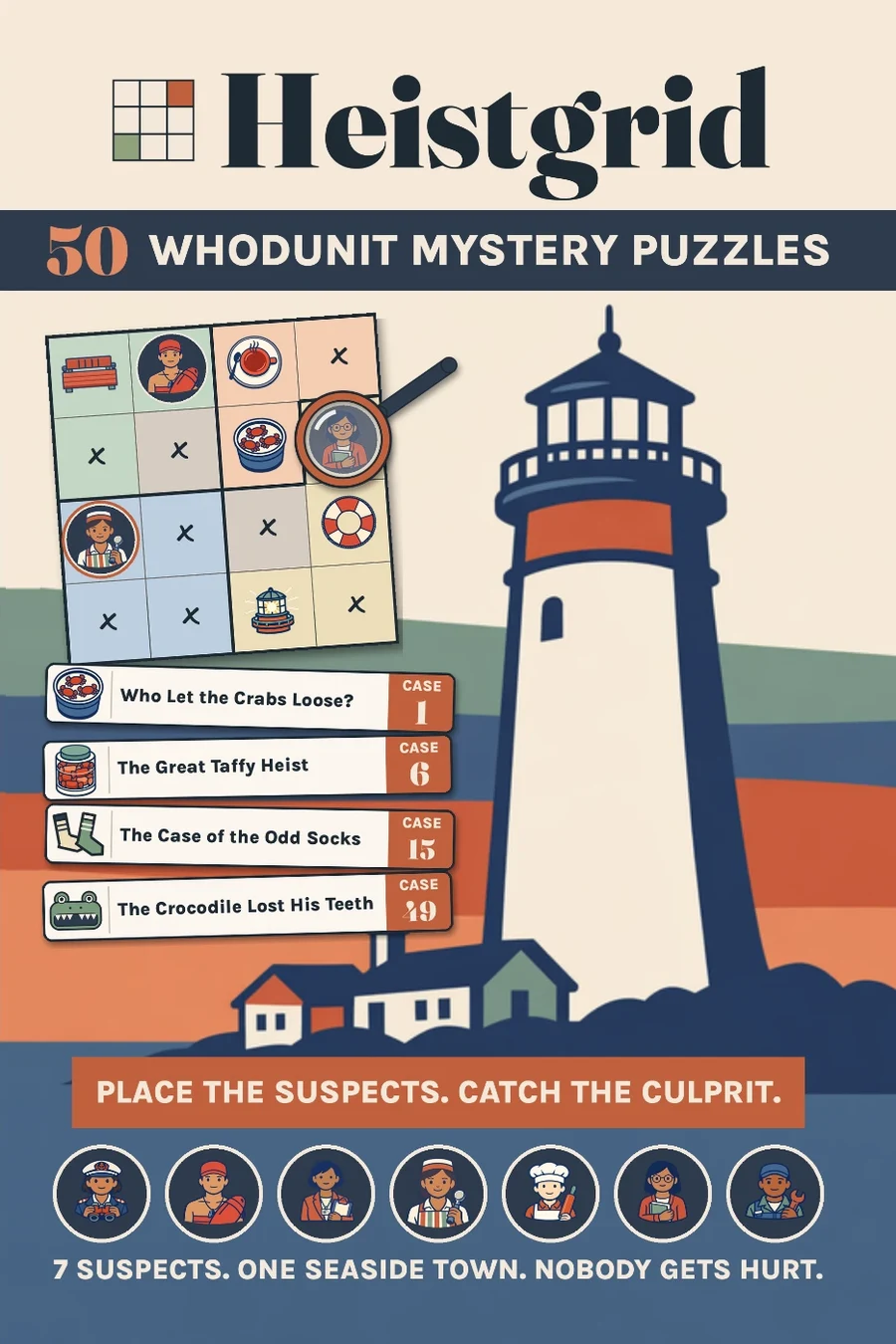
The book: 50 cases, from Junior Sleuth to Master Detective.
Buy the book