Which Heistgrid case should I start with? The four ranks explained
Updated 1 November 2026
By the Heistgrid team, a small puzzle studio · How we check every case
Start with a Junior Sleuth case: a small 3×3 board with direct clues that pin people down exactly. When that feels easy, the Inspector, Head Detective and Master Detective ranks add one new idea at a time — bigger grids, adjacency, a lying witness, and rooms and zones.
What are the four ranks?
The Pelican Bay cases come in four ranks, easiest to hardest: Junior Sleuth, Inspector, Head Detective and Master Detective. Every rank adds one new idea on top of the last, so you can start as small as you like and grow into the harder boards at your own pace. We check every case so there's always exactly one solution — the rank changes how much thinking it takes to get there, never how fair it is.
New to Murdle or Murdoku-style puzzles? The ranks work the same way for everyone: start at Junior Sleuth, whatever other puzzle books you have finished.
Here's what each one asks of you, rank by rank.
Which rank should a beginner start with?
Junior Sleuth. Nine cases on 3×3 grids, three suspects each, with direct clues: who stood at an edge, who was at the front, who was at the back. Nothing is hidden and nothing contradicts anything else — a clue pins someone down, and the rest follows from rows and columns filling up.
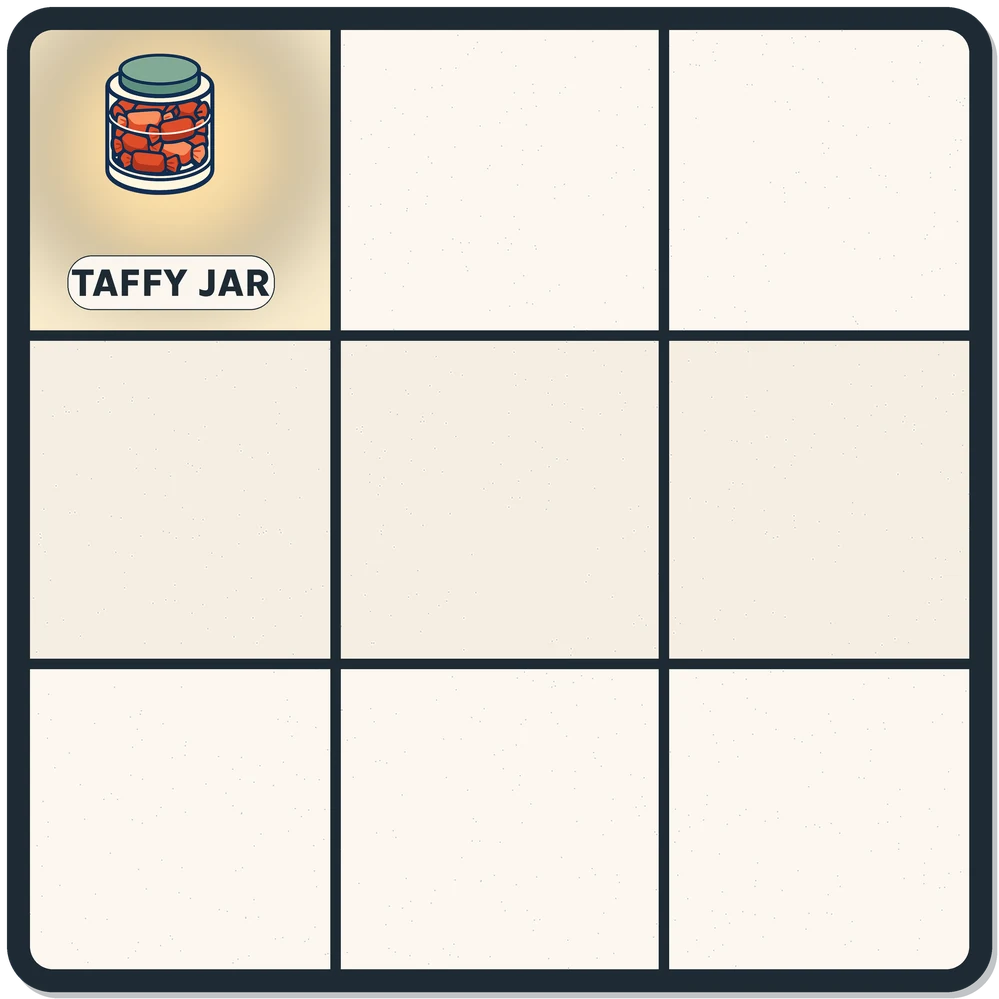
That's not a lesser form of the puzzle. It teaches the one habit everything else is built on: read the clue that pins someone to an exact spot, place them, and let the board tell you what's now impossible. If that sentence makes sense to you, you're ready. The Junior Sleuth cases are a gentle place to spend an evening with a pencil.
What does Inspector add?
Inspector moves you up, mostly to 4×4 grids with four suspects, and it adds a new kind of clue: adjacency. Instead of "Priya stood at the front", you get "Otto stood next to the ice-cream cart" — and next to means the squares beside it, in a straight line, not a diagonal.
The skill this teaches is elimination from objects. A cart in a corner touches fewer squares than a cart in the middle, so you ask which squares can reach it, cross off the rest for Otto, and often the answer falls out on its own. It's the first rank where the room itself becomes part of the puzzle. Try an Inspector case once the 3×3 boards feel like arithmetic.
How do the Head Detective cases work?
Head Detective is where the whodunit earns its coat: fifteen cases on 4×4 grids, and in each one exactly one witness is lying. One of their statements is false, and the rest of the testimony is true. You pick a witness to test as the liar, check whether the other statements still fit, and keep going until only one choice leaves everything consistent.
It's a genuine step up in thinking, but it's a method, not a leap. Our liar-puzzle guide walks through the technique with made-up witnesses, and the Head Detective cases all follow the same rules. Made-up example: Ada says Ben stood by the pond, Ben says he didn't, and the pond clue is hard evidence — one of the two is your liar, and only one arrangement makes everything true.
How hard is Master Detective?
Master Detective is the deep end: fifteen cases on 4×4 and 5×5 grids where the scene is divided into rooms and zones. A clue might say Nadia was somewhere in the reading corner, or that nobody in the entrance zone stood next to anyone from the gallery — so you place people square by square and room by room at the same time.
The skill it teaches is planning. You learn to fill the smallest room first, because a tight room with three squares gives away more than an open zone with six. Nothing new is being smuggled in — it's the same rows, columns and clues — but the board is bigger and the clues talk about it in layers. The Master Detective cases are for solvers who want a case to sit with for a while.
When should I move up a rank?
When the current rank feels easy — not after a fixed number of cases or a set stretch of days. There's no badge for rushing. If you finish a Junior Sleuth case without needing to think about which clue to read first, that's the signal: try an Inspector one, and expect it to slow you down again for a case or two. That slowdown is the learning.
It works the other way too. If a rank feels like hard work, stay there. The cases within a rank vary, and re-reading your pencil marks is never time wasted. And whenever you want the whole ladder on paper, the book collects all fifty cases in rank order, with step-by-step solutions at the back.
Try it yourself





Want 50 of these on paper?
Our book has 50 cases, from gentle to tricky, with step-by-step solutions at the back. About the book
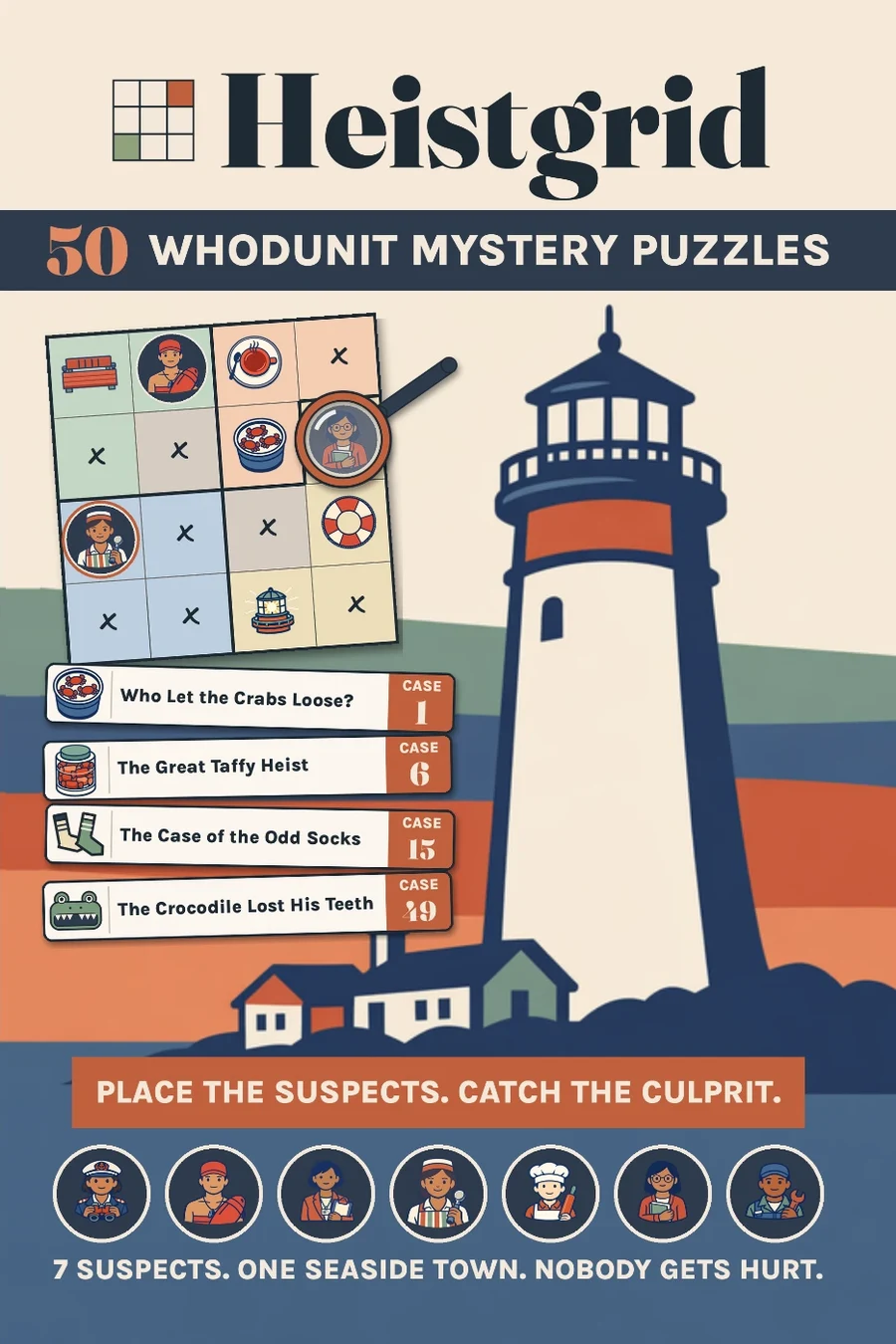
The book: 50 cases, from Junior Sleuth to Master Detective.
Buy the book