How hard are whodunit logic puzzles?
Updated 8 November 2026
By the Heistgrid team, a small puzzle studio · How we check every case
Whodunit logic puzzles range from gentle to genuinely tough: the easy ones use a small board and direct clues, and they get harder with a bigger board, more suspects, indirect clues like "next to", a witness who lies, and scenes split into rooms or zones. The hardest ones for adults combine several of those at once, and we sort our cases into four ranks — Junior Sleuth, Inspector, Head Detective and Master Detective — so you can pick your level before you start.
How hard are whodunit logic puzzles?
As hard as the case wants to be. The rules never change — one suspect per row and column, grey spots are taken, the final clue points at the culprit — but the same rules can make a puzzle you finish over a cup of tea or one that keeps you at the table all evening.
So the useful question isn't "is it hard?" but "what makes one harder than another?" Once you know that, you can pick the right case for your mood.
What makes a whodunit logic puzzle harder?
Five things, roughly in the order you'll meet them:
The size of the board. A 3×3 board has few places to stand, so every clue rules out a lot. A 4×4 or 5×5 board leaves far more room for doubt.
The number of suspects. A bigger board usually means more people to place, and every extra person is one more thing to keep track of.
Indirect clues. "Ada was at the front" tells you a row. "Ada was next to Ben" or "Ada was not in the same row as Cleo" only tells you how two people relate, so you have to hold both in your head until something else pins one of them down.
A witness who lies. In some cases one statement is false, and you don't know which. You have to test each witness as the liar and see which choice leaves a case that works.
Rooms and zones. When the scene is split into rooms, clues like "in the kitchen" point at an area rather than a row or column, and you combine them with the usual rules.
What does an easy clue look like?
Our demo case is a good example of the gentle end. Three people, a 3×3 library and a returns cart taking one spot. The clues are direct: "Priya was at the front of the library" and "Otto was all the way on the left" each place someone in a row or a column straight away.
· front ·
Swap those for "Priya was not next to Otto" and the same small board gets noticeably trickier, even though nothing else has changed. If you'd like to see the whole demo case solved step by step, our how to play page walks through it.
Are Murdle and Murdoku hard?
Murdle and Murdoku are well-known whodunit puzzle books, and both start gently and get harder as you go. Murdle works like a classic logic grid, matching suspects with places and objects; Murdoku has you place suspects on a map, which is closer to what we make. In both, the difficulty climbs for the same kinds of reasons listed above: more to track, less said outright.
How do our four ranks measure difficulty?
We sort every case into one of four ranks, so you know what you're opening before you start.
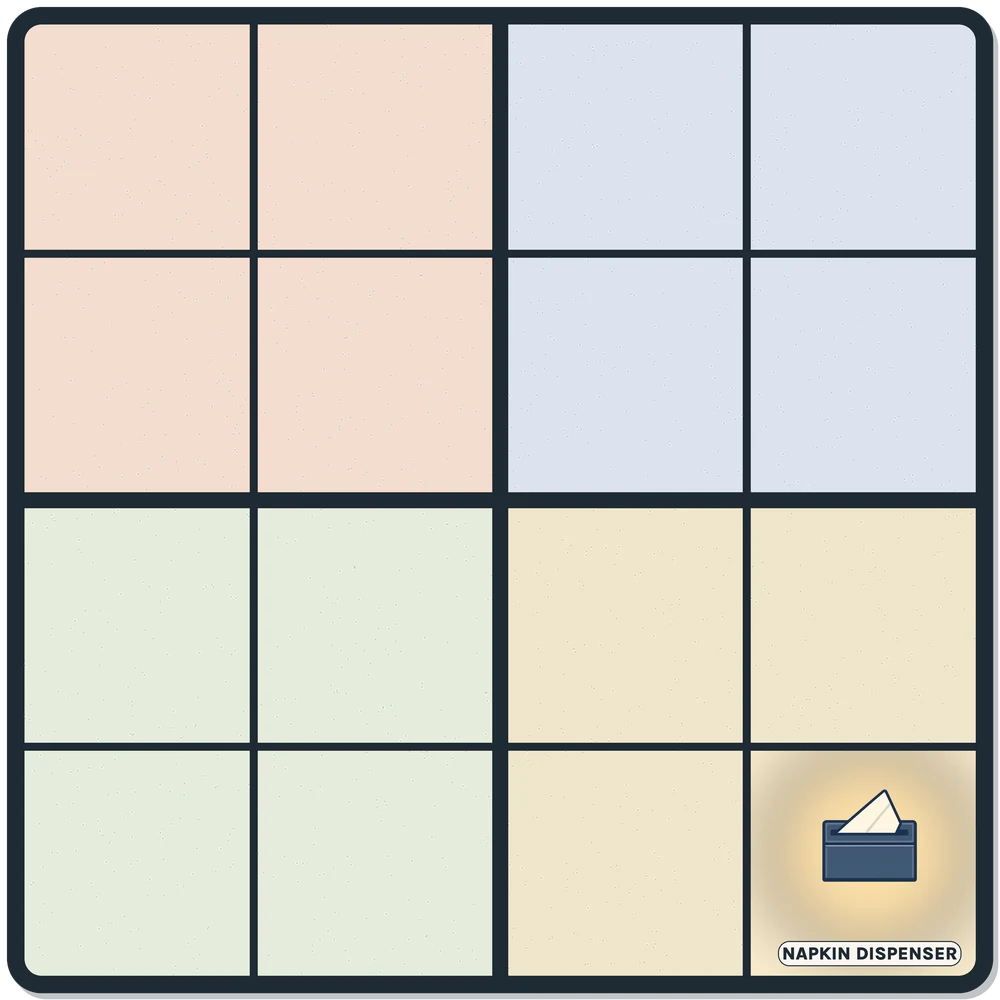
Junior Sleuth cases use the 3×3 board and direct clues. Inspector cases move up to 4×4 and lean on clues like "next to" and "not in the same row". Head Detective cases add a witness who lies. Master Detective cases split the scene into rooms or zones, on 4×4 and 5×5 boards.
We place each case by how players actually get on with it, not just by how it looks on paper, so a rank should feel like a rank.
What are the hardest logic puzzles for adults?
In our cases, the Master Detective rank is where adults who like a real fight end up. Rooms and zones, a crowded board and clues that only make sense together all arrive at once. Head Detective cases are hard in a different way: the grid is calmer, but you can't trust every word you read. If that's the part you want to get better at, our guide to liar puzzles is the place to start.
Where should you start?
Start one rank below where you think you belong. A Junior Sleuth case teaches the rules in a few minutes; an Inspector case shows you whether indirect clues are your thing. Move up when the current rank stops surprising you. Hard is only fun when you got there yourself.
Try it yourself



Want 50 of these on paper?
Our book has 50 cases, from gentle to tricky, with step-by-step solutions at the back. About the book
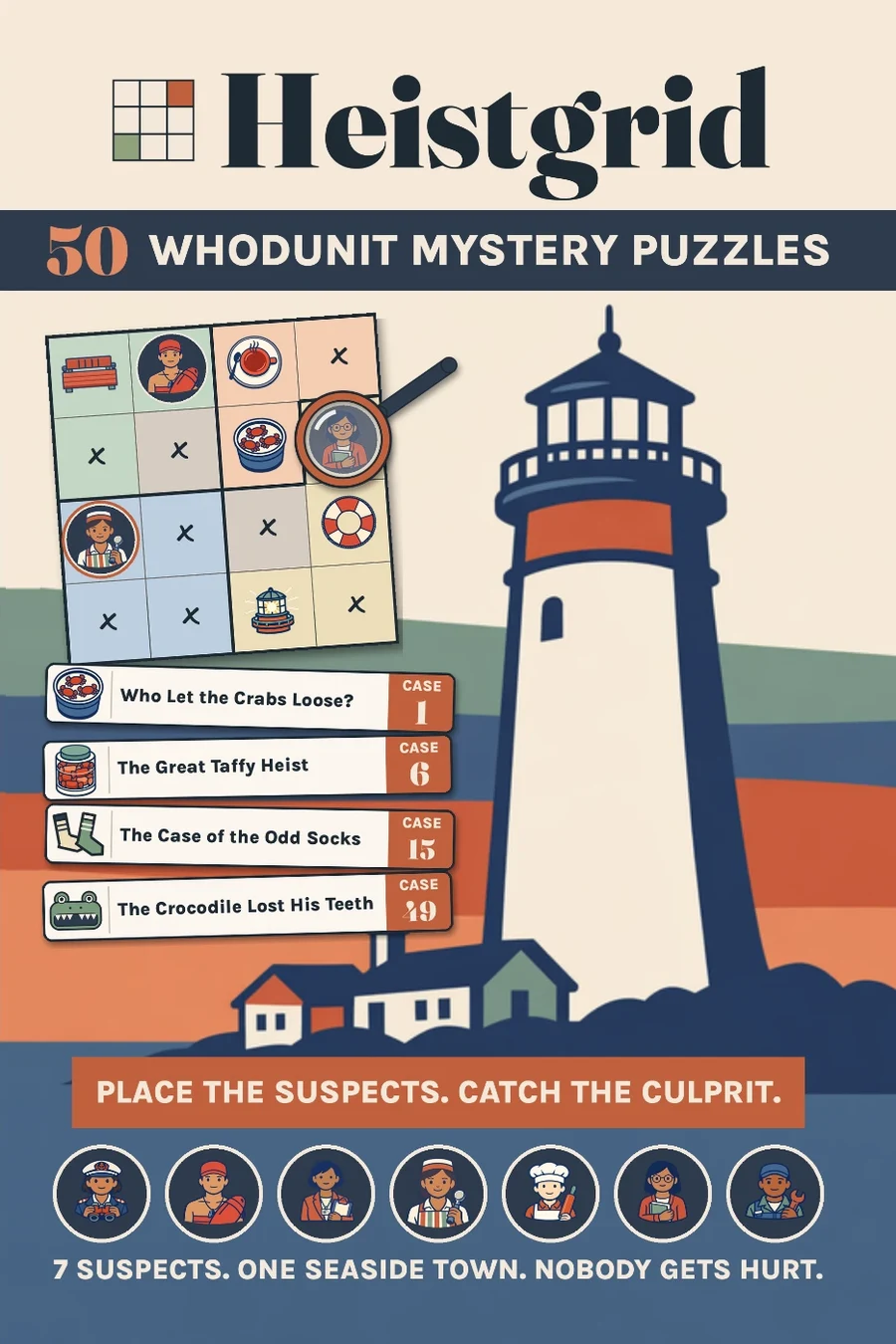
The book: 50 cases, from Junior Sleuth to Master Detective.
Buy the book